Bojnice before the castle
Long before the first castle walls, Neanderthals chose this landscape as their home. The Museum of Prehistory of Slovakia dates the earlier settlement around today's castle to approximately 120,000–90,000 years ago. A later phase around Prepoštská Cave dates to about 60,000 years ago. The story of Bojnice is therefore much older than the town's name or its best-known silhouette.[1]
Stone tools and other archaeological finds recall the daily struggle for food, warmth and safety. Prepoštská Cave was recognised as an important Palaeolithic site by Provost Karol Anton Medvecký, who discovered it in 1926. The cave's name, meaning “Provost's Cave”, refers to him.[1]
How the town grew beneath the fortress
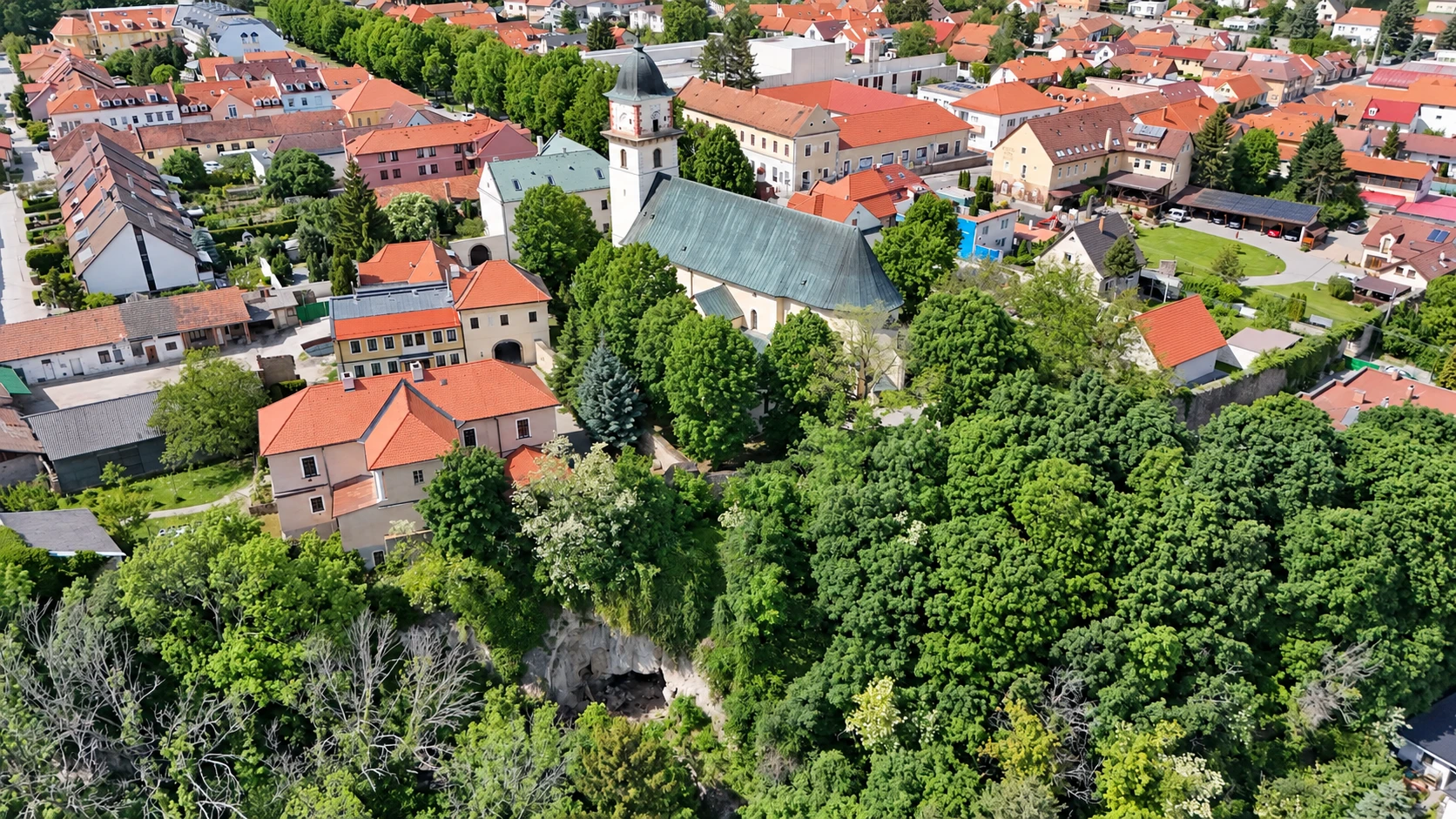
The first written reference appears in the Zobor charter of 1113. It mentions the people living below Bojnice Castle, recalling a settlement closely connected to the fortress. Today's town did not emerge through a single decision: its character gradually took shape through its inhabitants, economy and changing estate owners.[2]
An important turning point came in 1366, when Louis I granted Bojnice town privileges. Rights relating to a mill, baths and other economic activities encouraged trade and crafts. Alongside agriculture, a small town with its own administration developed below the fortress.[2]
The history of Bojnice also belongs to people at workbenches and market stalls. A shoemakers' guild was founded in 1653; tailors, bootmakers, weavers and coopers also worked here. Between 1613 and 1823, the town served as a postal station, and its markets brought together goods and traders from several countries. Times of military tension left a different mark: stone town fortifications were added in 1663.[3]
As you walk through the historic centre, remember this town of everyday work. Crafts, houses and local stories help preserve its memory just as much as the castle rooms.
Saffron that connected Bojnice with the world
Saffron was grown on the Bojnice estate as early as the 15th century. The Centre for Traditional Folk Culture's specialist encyclopaedia describes it as a prized crop and lists Bojnice saffron among the finest. Its uses went beyond the kitchen: it was also an ingredient in traditional medicines, cosmetics and dyes.[4]
A garden or field dedicated to growing saffron. This precious spice is made by drying the red stigmas of the saffron crocus (Crocus sativus). They are collected by hand, which helps explain its high value.[5]
Bojnice Cultural Centre associates the earliest known local reference to saffron with a donation charter of the Onoffry family from 1430. The spice appears among contributions to the parish. This is evidence of its presence and probable cultivation, rather than proof that the tradition began in that exact year.[5]
Saffron reached customers from the gardens through travelling saffron traders. Door-to-door trading is documented in the 16th and 17th centuries. Inhabitants of the Vestenice Valley also played an important role, selling it within the Kingdom of Hungary and beyond. The story of this precious spice is also one of travel, livelihoods and Upper Nitra's connections with the wider world.[4]
Cultivation and trade gradually declined. By the early 19th century, the original saffron traders were selling other small goods as well, although the name of their occupation survived. A single end date would not fully reflect this gradual change.[4]
Why “Saffron Bojnice”?
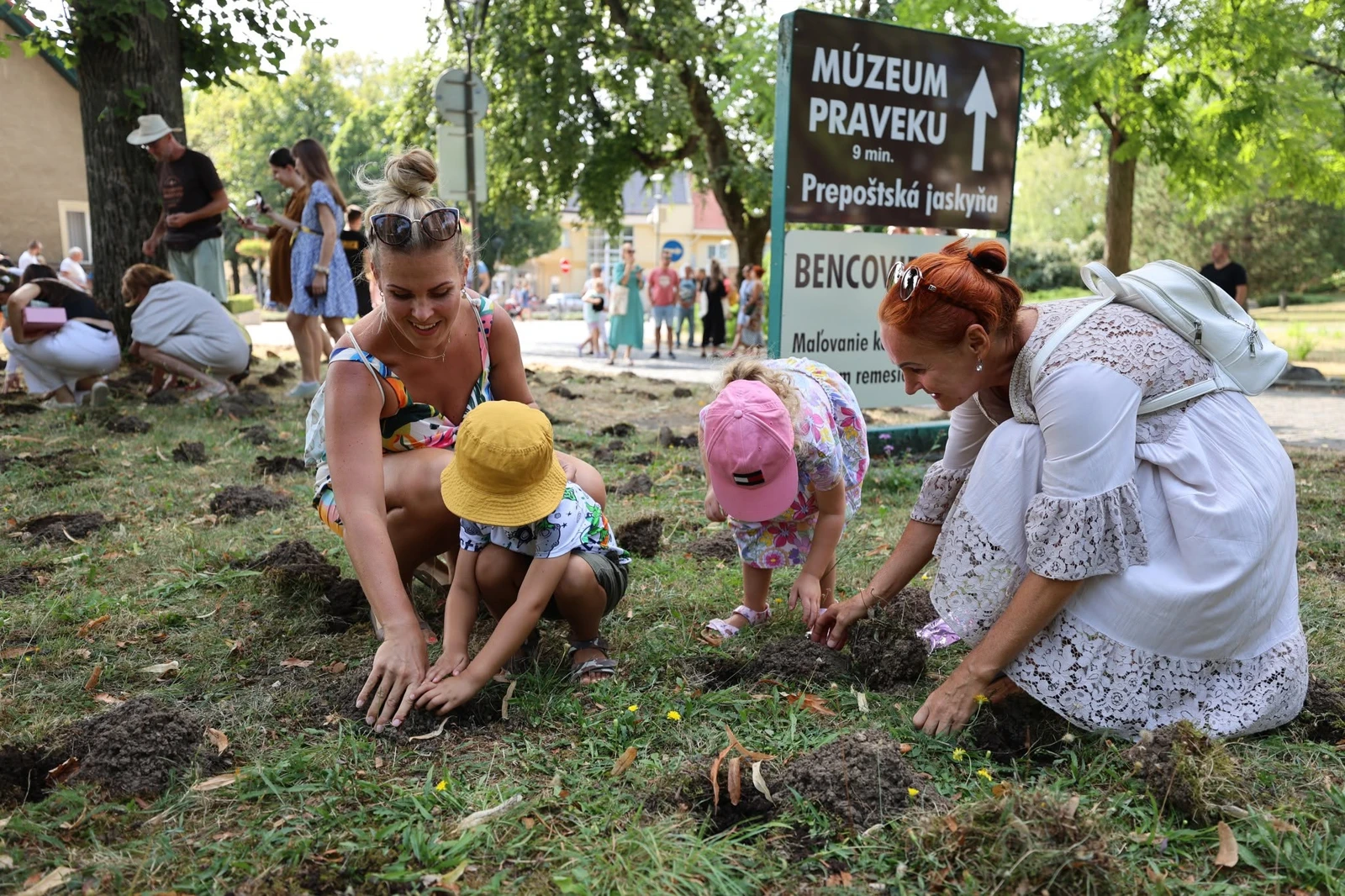
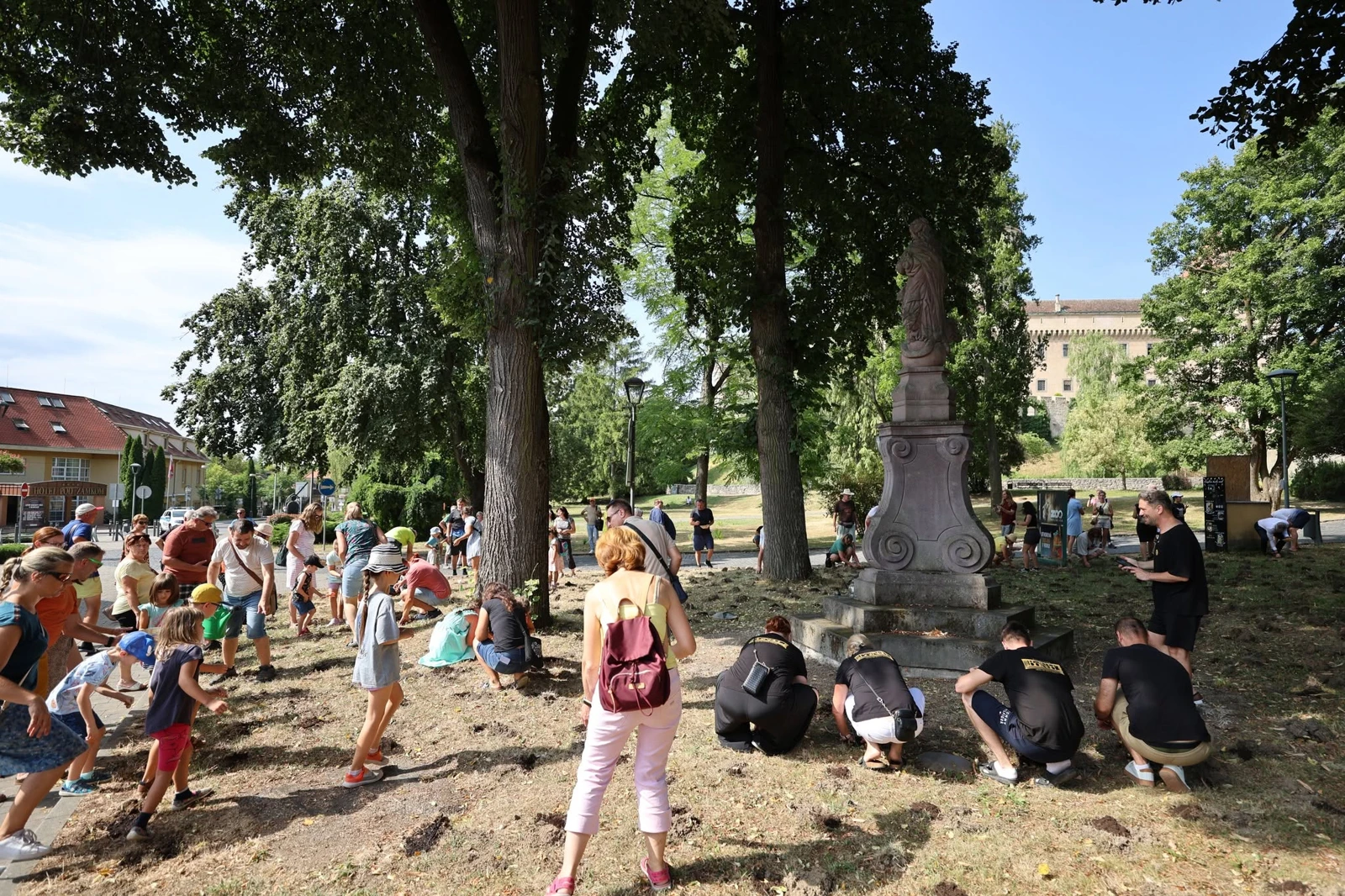
The name recalls historic saffron cultivation and its return to the life of the town today. The Cultural Centre, town and regional tourism organisation have revived the tradition through planting and cultural activities. More than 8,000 corms were planted at various locations in Bojnice in August 2024. These public plantings are ornamental and commemorative; they are not intended for harvesting.[5]
When residents join in the planting
Community saffron planting in Bojnice, captured in codnes.sk photographs.
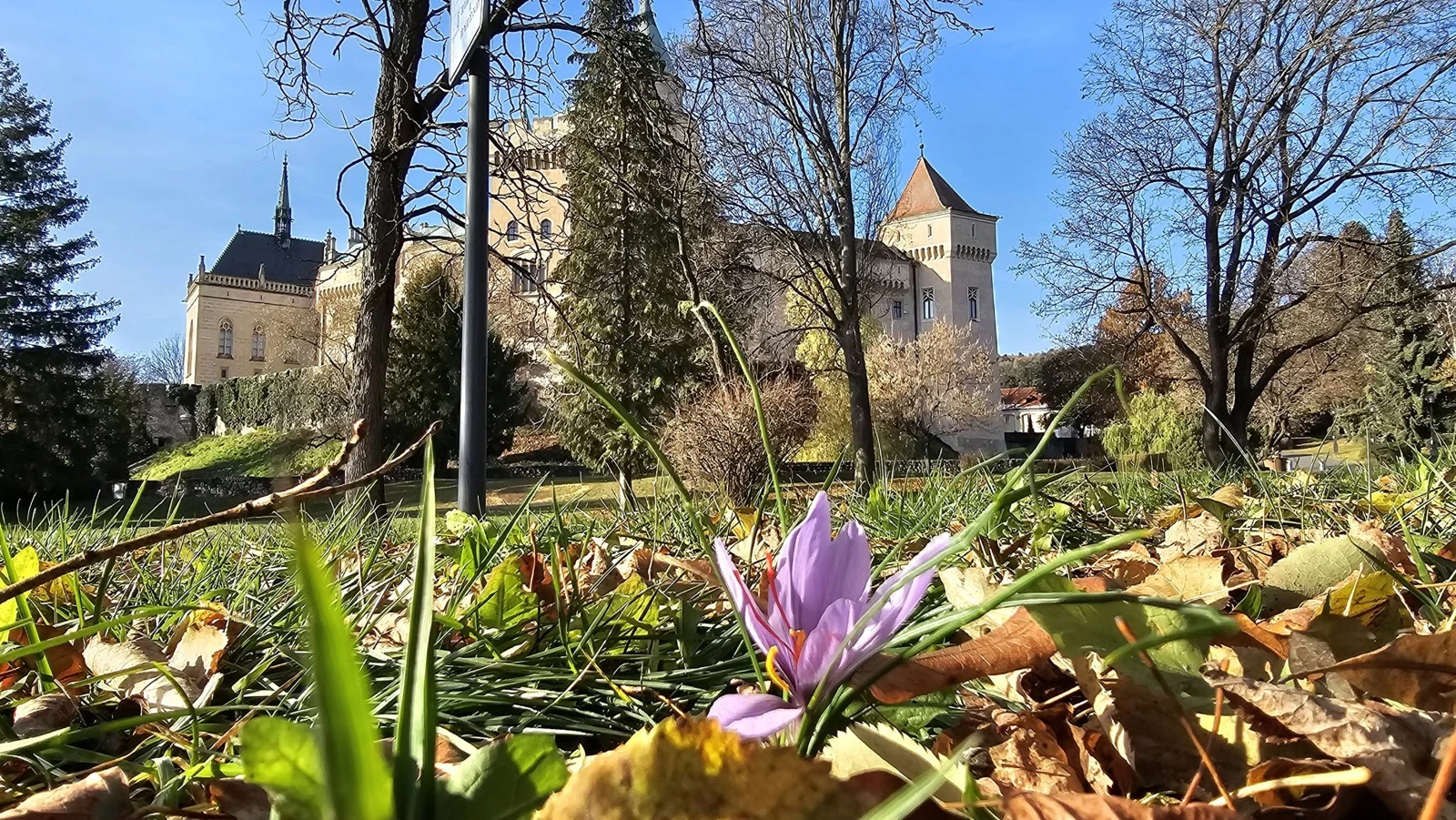
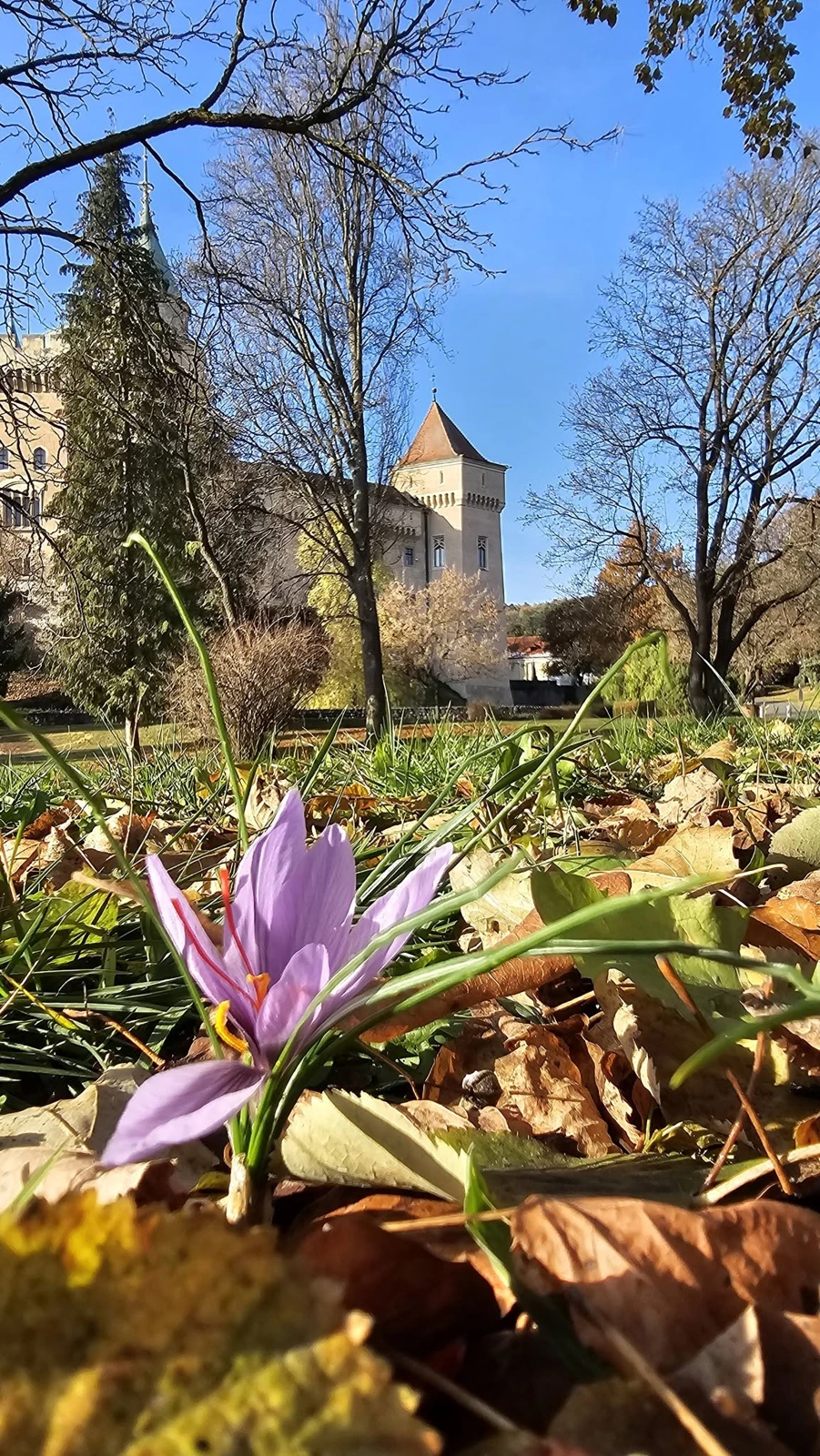
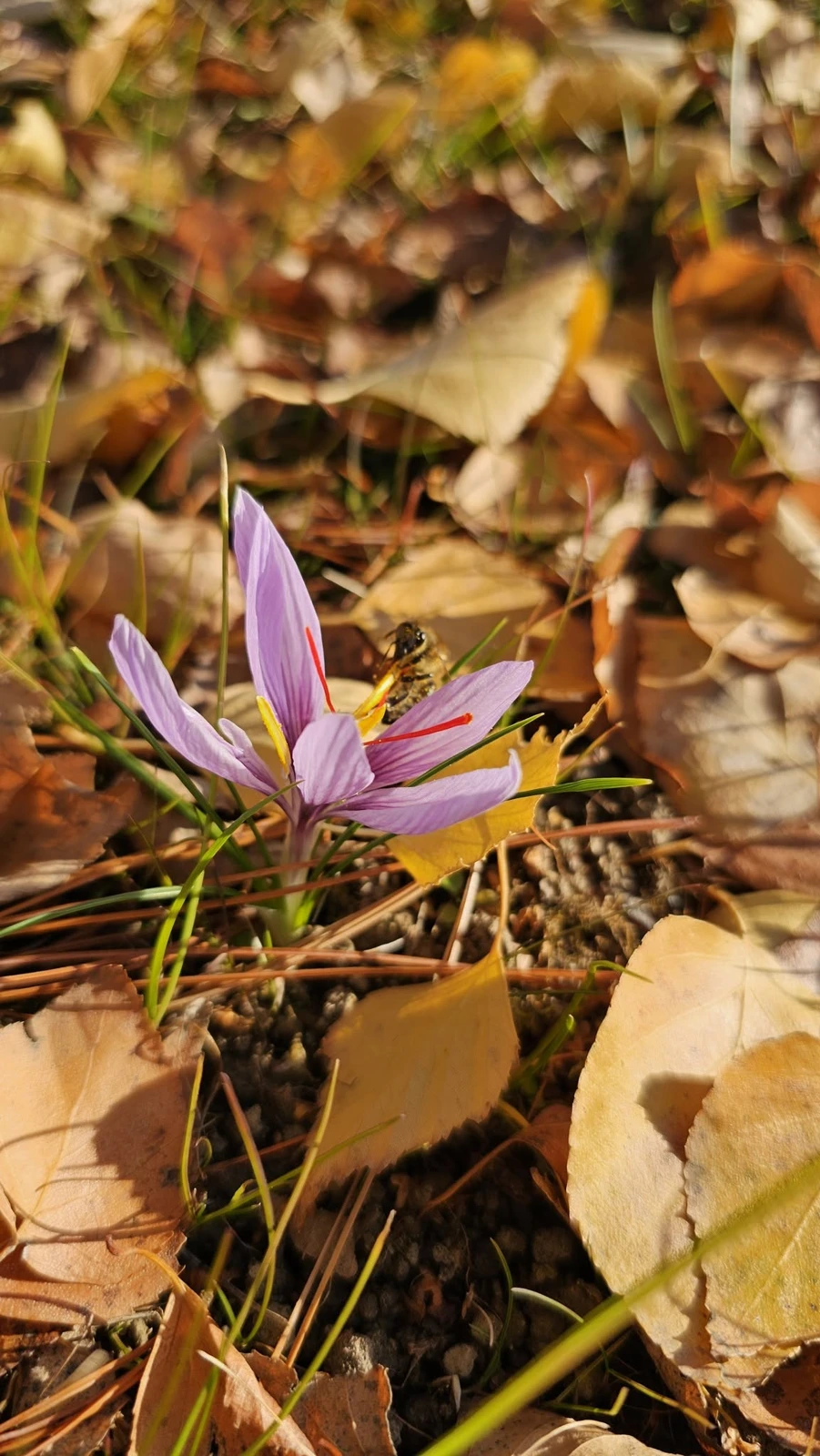
A small flower beneath a grand castle
Saffron in bloom among autumn leaves. Ground-level views bring the tiny flowers together with the familiar silhouette of Bojnice Castle.
The saffron story also lives on in event names and programmes. The archived Šafranové Bojnice 2026 programme brings together historical games, stories about cultivation, food tasting and music. It offers visitors a chance to experience local history first-hand.[8]
When saffron appears in Bojnice's cultural programme, imagine the old gardens and traders behind it. Today's planting and events keep this memory alive in new ways.
See the Šafranové Bojnice 2026 archive on codnes.sk ↗ (Slovak)The event archive illustrates the tradition. Find current activities in the events listings.
A romantic castle and warm springs
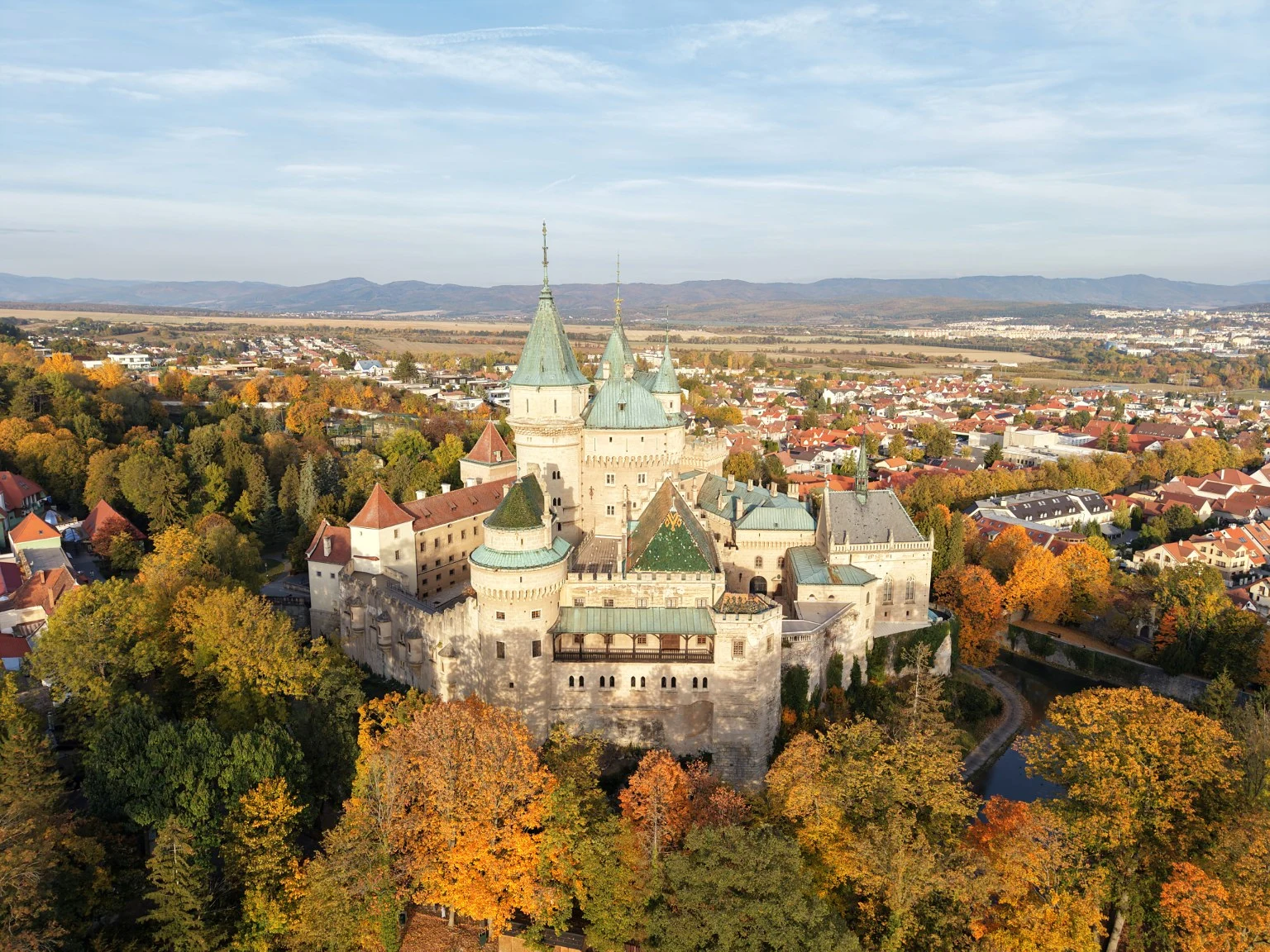
The castle's appearance today is the result of a long transformation. An older fortress evolved through Renaissance and Baroque alterations into the romantic building familiar from photographs. Its last aristocratic owner, Count Ján Pálffy, drew inspiration from European architecture, including the French castles of the Loire Valley.[6]
The reconstruction took place between 1889 and 1910 and was designed by architect Jozef Hubert. Pálffy did not live to see it completed: he died in 1908. The castle has housed a museum since 1950. Its silhouette also reflects the personal taste and collecting ambitions of a man who profoundly shaped the image of Bojnice.[6]
Thermal springs provide another thread of history. Bojnice Spa points to their mention in the charter of 1113; in 1549, Juraj Wernher described baths with pools of different temperatures. They changed along with the estate, with modern development continuing under the Baťa family in the 1930s.[7]
Prehistory, castle history, saffron and spa culture offer different ways to understand Bojnice today. On your next visit, choose one of these threads and give it a little more time.
Bojnice through time
- PrehistoryNeanderthal settlement around the castle and Prepoštská Cave.[1]
- 1113The Zobor charter mentions the people living below Bojnice Castle.[2]
- 1366Louis I grants Bojnice town privileges.[2]
- 15th–18th centuriesA period of saffron cultivation and trade.[4]
- 1663Stone fortifications are built around the town.[3]
- 1889 – 1910Romantic reconstruction of the castle according to Pálffy's vision.[6]
- 1926Karol Anton Medvecký discovers Prepoštská Cave as a Palaeolithic site.[1]
- 1950A museum is established at the castle.[6]
- 2024Saffron returns to public planting in the town.[5]
Sources and further reading
This visitor-oriented text is based on the sources listed below. For the year 1430, we retain Bojnice Cultural Centre's interpretation; the specialist encyclopaedia dates evidence of cultivation more broadly to the 15th century.
- Museum of Prehistory of Slovakia – discovery of the Neanderthal site ↗
- Horná Nitra – Bojnice region: town history ↗
- Town of Bojnice – 2013 annual report, historical overview, pp. 4–5 ↗
- Centre for Traditional Folk Culture – saffron growing, Ľubica Falťanová ↗
- Bojnice Cultural Centre – Šafranové Bojnice ↗
- SNM–Bojnice Museum: history of Bojnice Castle ↗
- Bojnice Spa – history ↗
- codnes.sk – Šafranové Bojnice 2026, event archive ↗ (Slovak)
Prepared on 24 October 2026. The photographs show present-day Bojnice.